Companies and individuals with ties to the cryptocurrency industry spent a record amount supporting candidates in the midterm elections, but with more than two-thirds of the money going to Republican candidates and committees, the results of their funding were mixed.
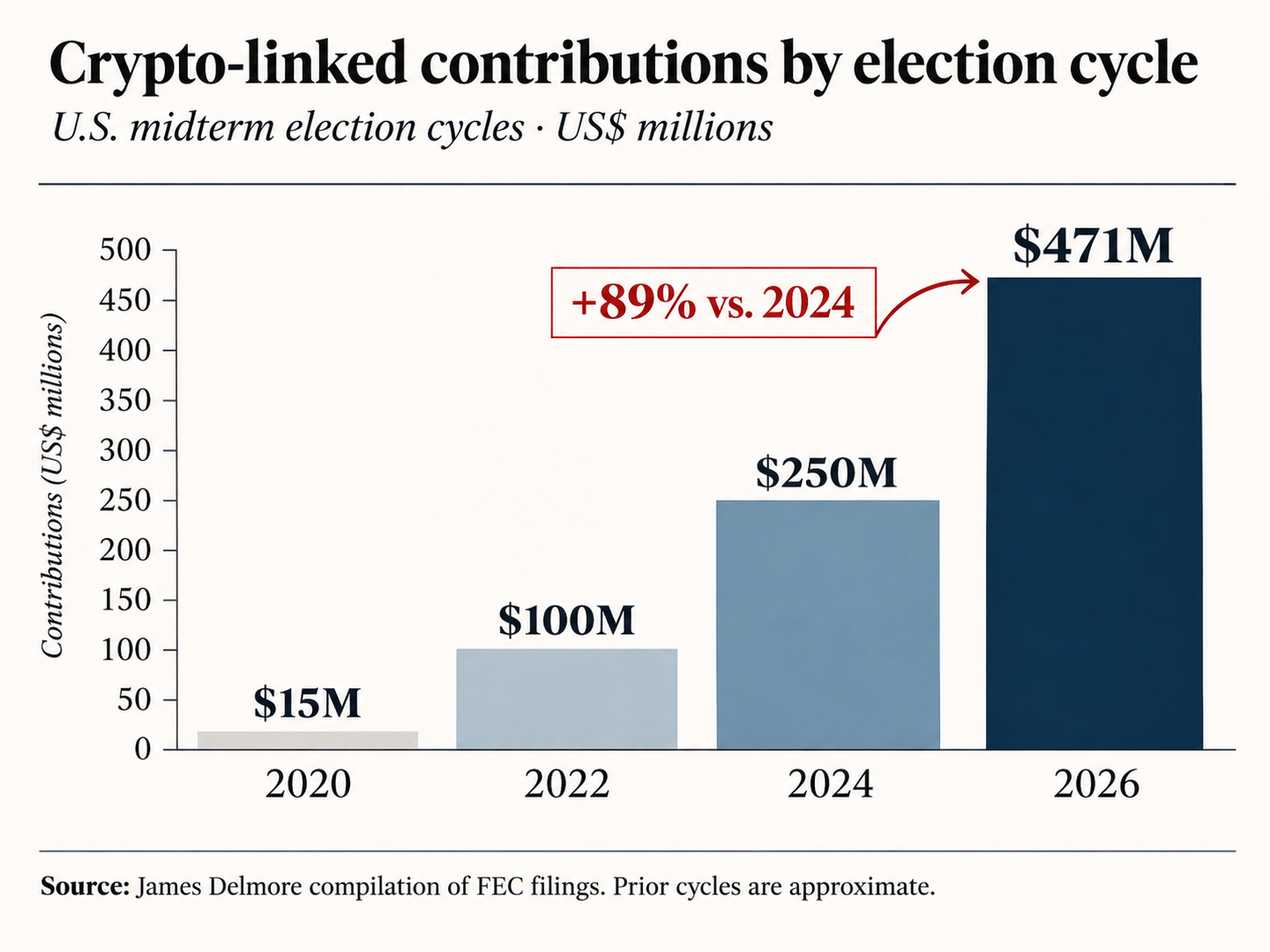
Companies and individuals with ties to the cryptocurrency industry contributed a record amount of at least $471 million during the 2026 US election cycle, nearly double the $250 million spent in 2024, according to an analysis of FEC records.
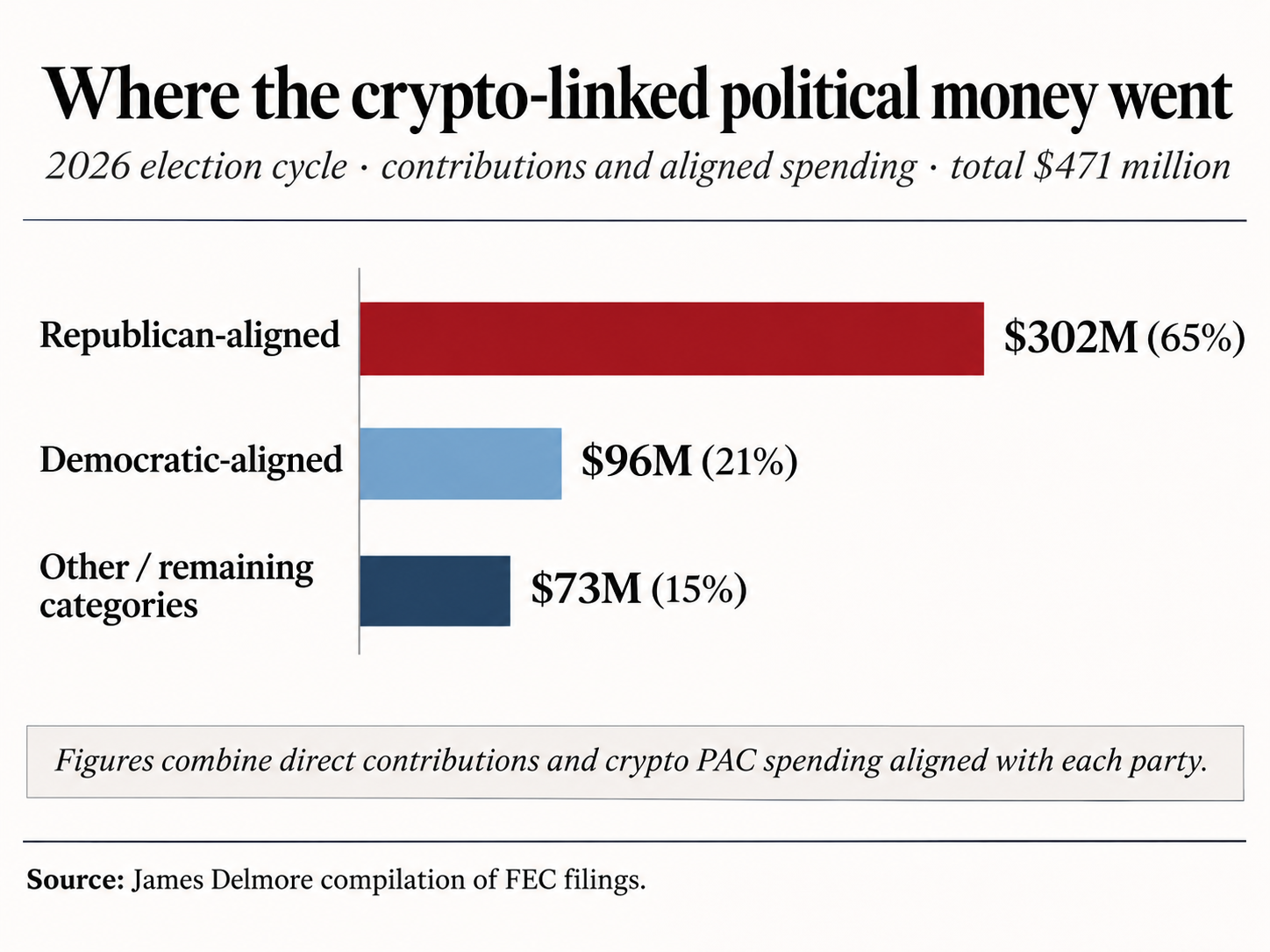
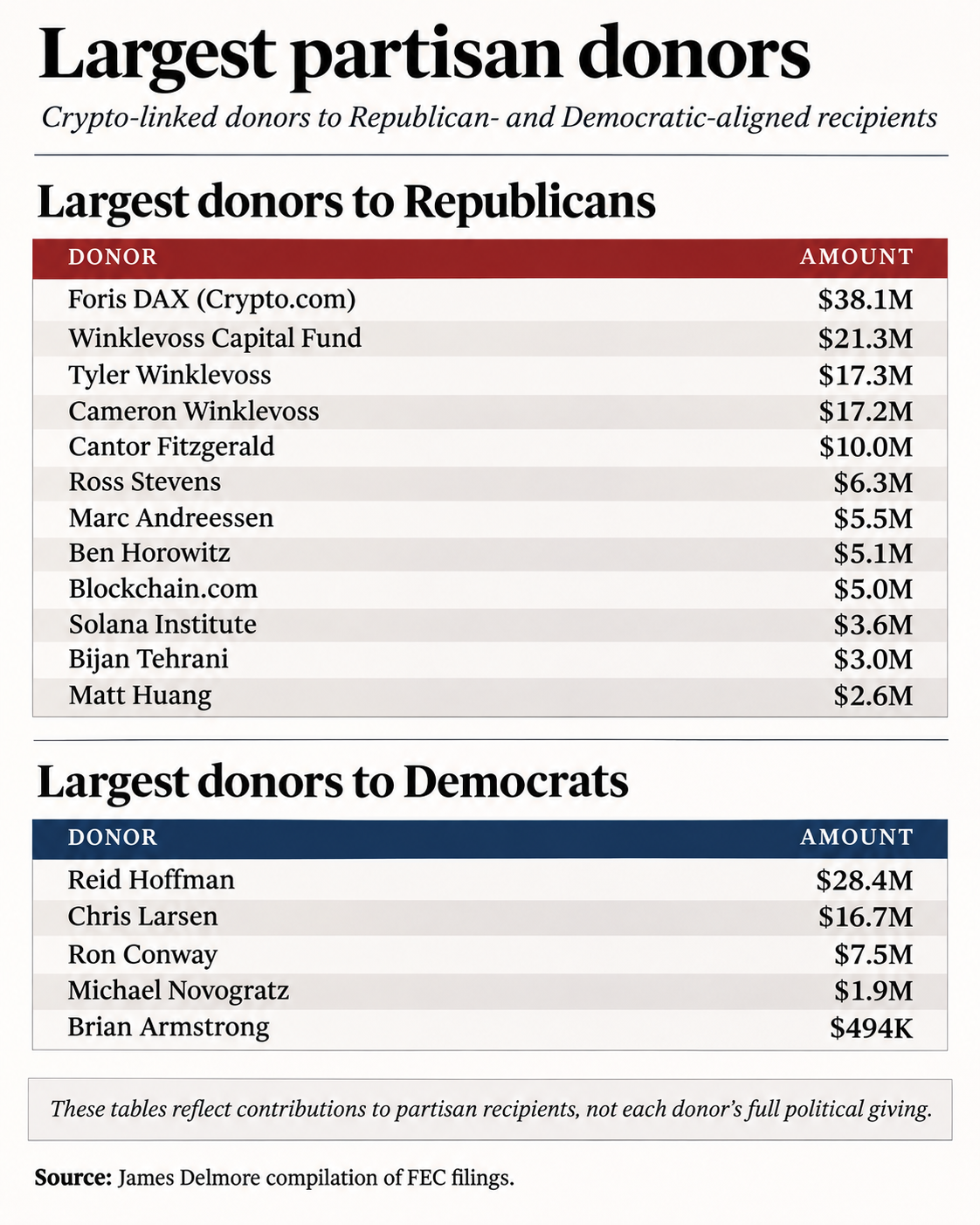
Republicans received the overwhelming majority of contributions and spending support from the crypto industry. Of the $471 million, $302 million (or 65%) went to or was spent on Republican-aligned candidates, while $96 million (or 21%) went to Democratic-aligned candidates.
WHO GOT THE MONEY?
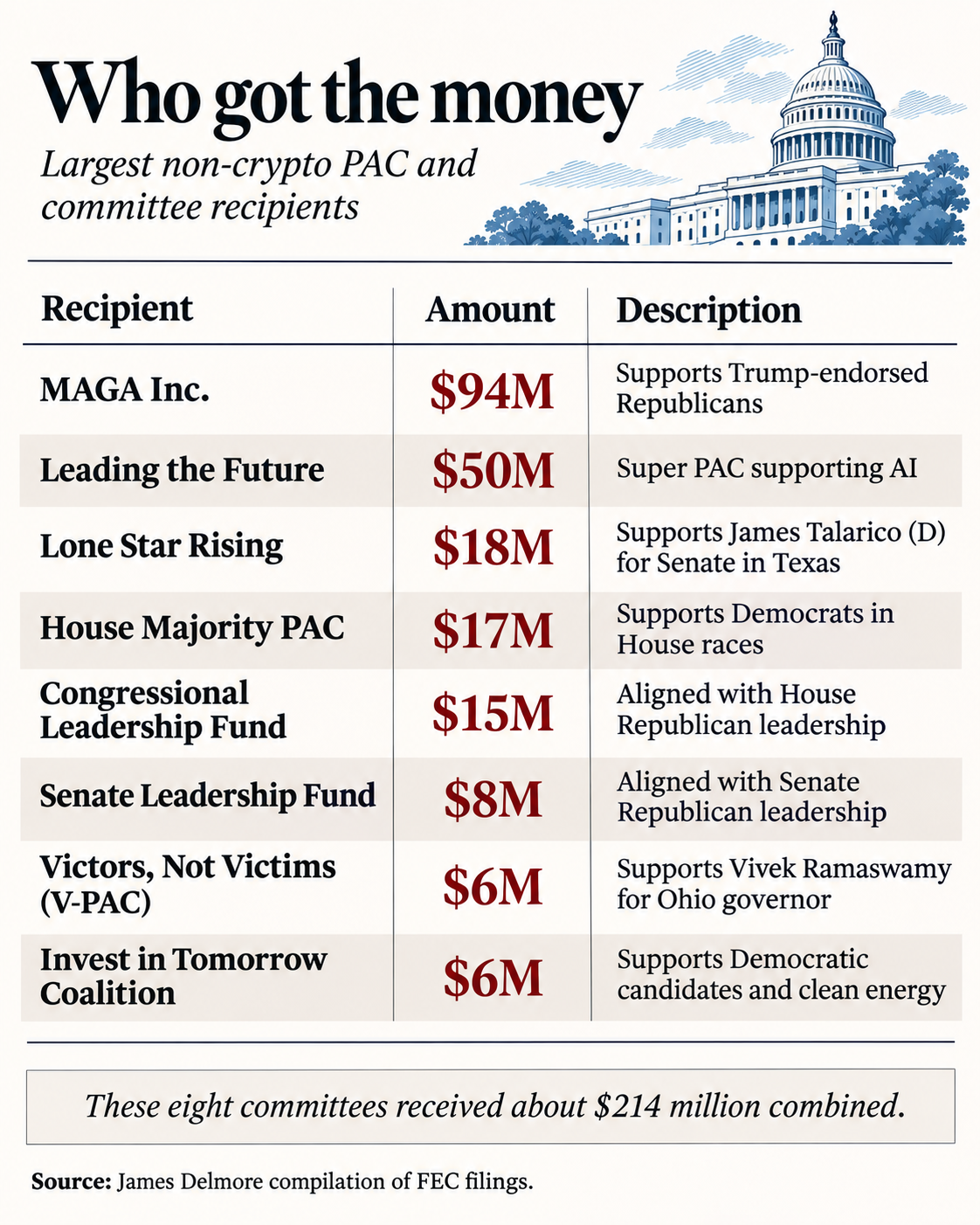
Non-crypto PACs and committees received more than $250 million in contributions from the crypto industry.
MAGA, Inc., the super PAC that supported candidates aligned with President Trump’s agenda, received by far the most money from crypto industry among non-crypto PACs with $94 million.
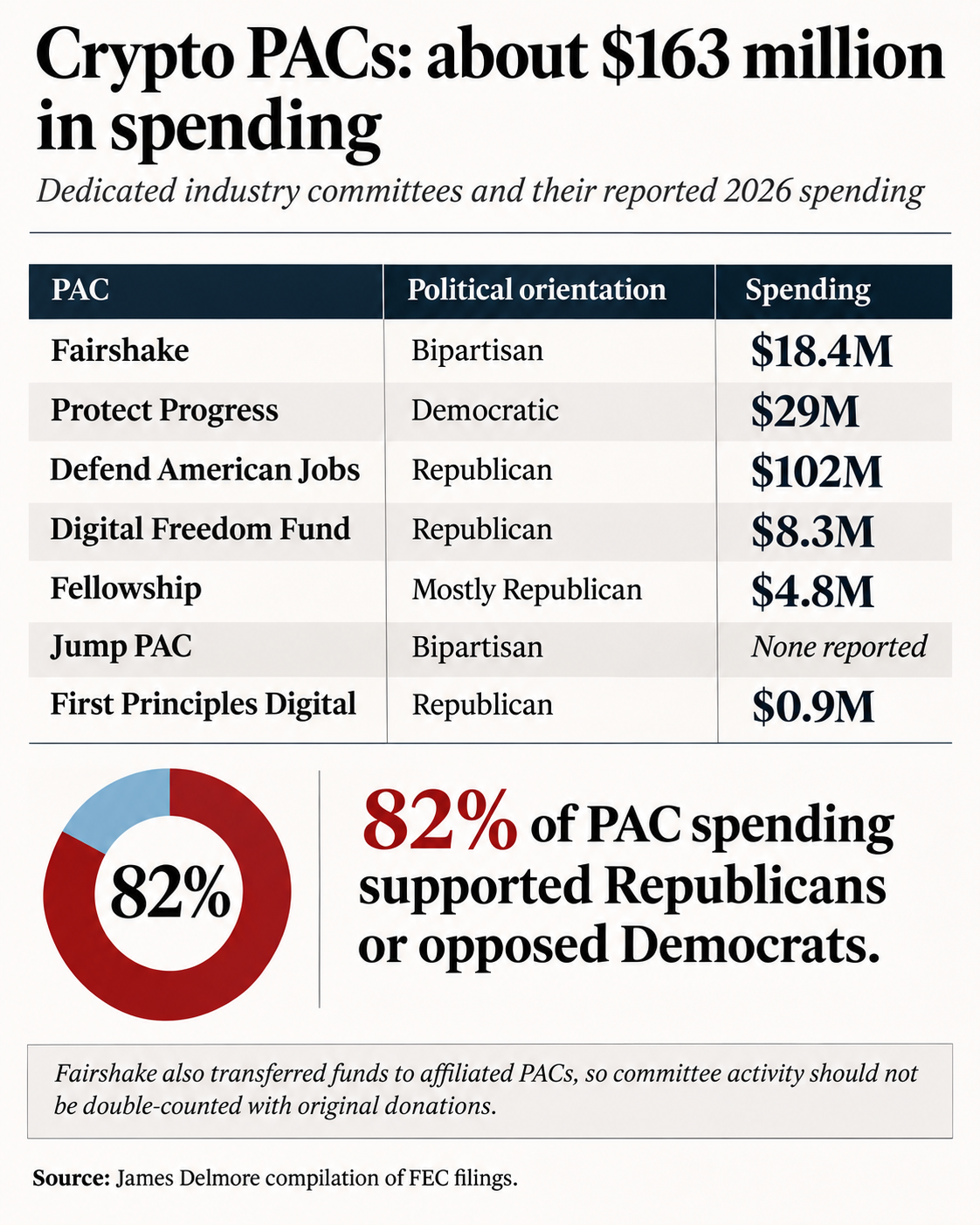
Crypto PACs Received more than $200 Million and Spent $163 Million
Most of the rest of the crypto industry’s contributions went to the crypto PAC Fairshake, which then transferred most of its funds to its affiliate PACs, Protect Progress and Defend American Jobs.
These crypto-focused PACs spent approximately $163 million during both the primary and general midterm elections. 82% of their spending was directed to support Republicans, while only 18% went to supporting Democrats.
Where Crypto PACs Spent Their Money
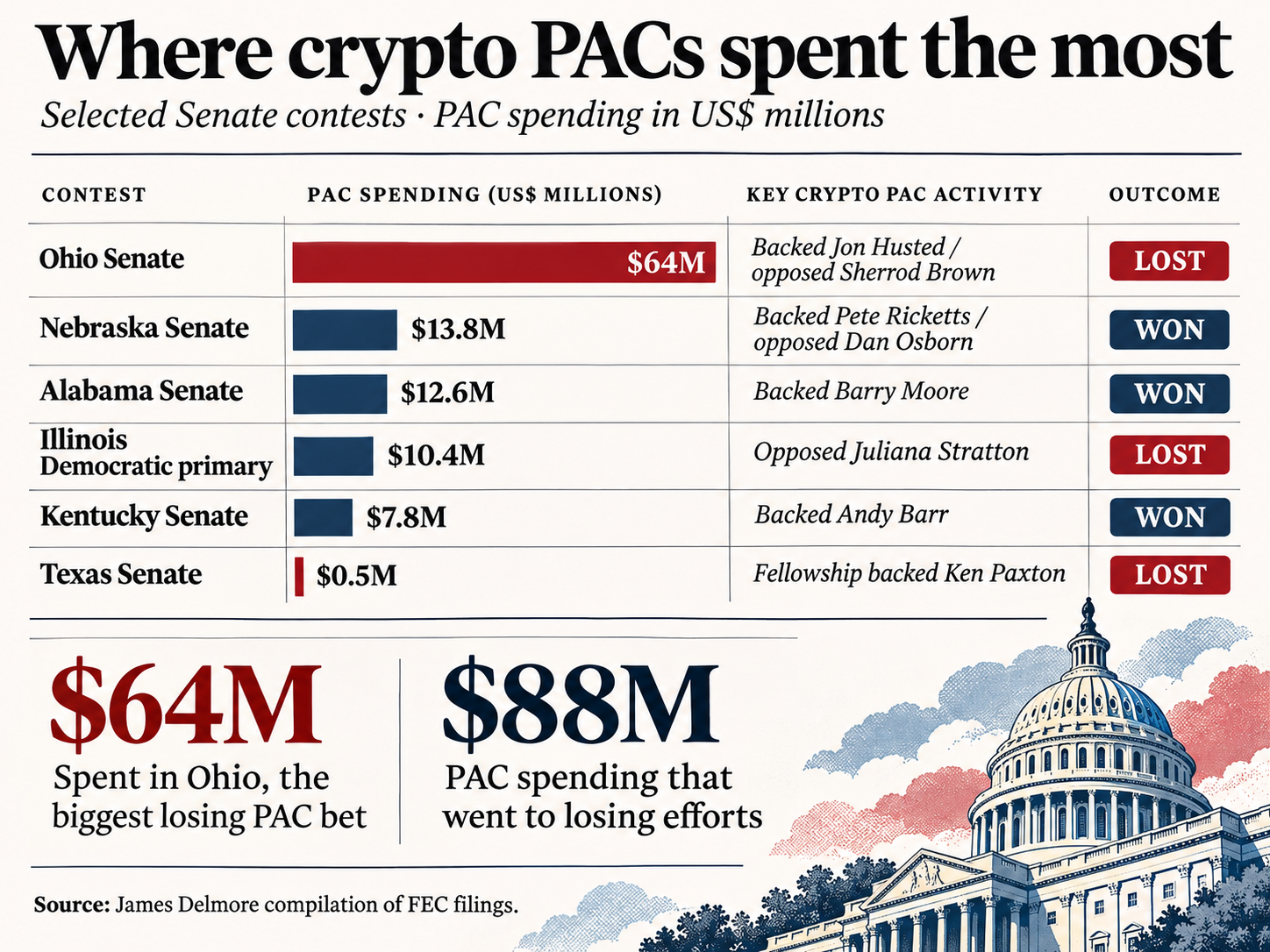
Crypto Super PACs spent money $163 million on 90 congressional and senate races in the primary and general elections.
$110 million of the total spending went to just six senate races.
The Ohio senate race between Jon Husted (R) and Sherrod Brown (D) received by far the most spending, $64 million, as the crypto industry attempted to defeat the notoriously anti-crypto senator Sherrod Brown.
WHO ARE THE CRYPTO INDUSTRY DONORS
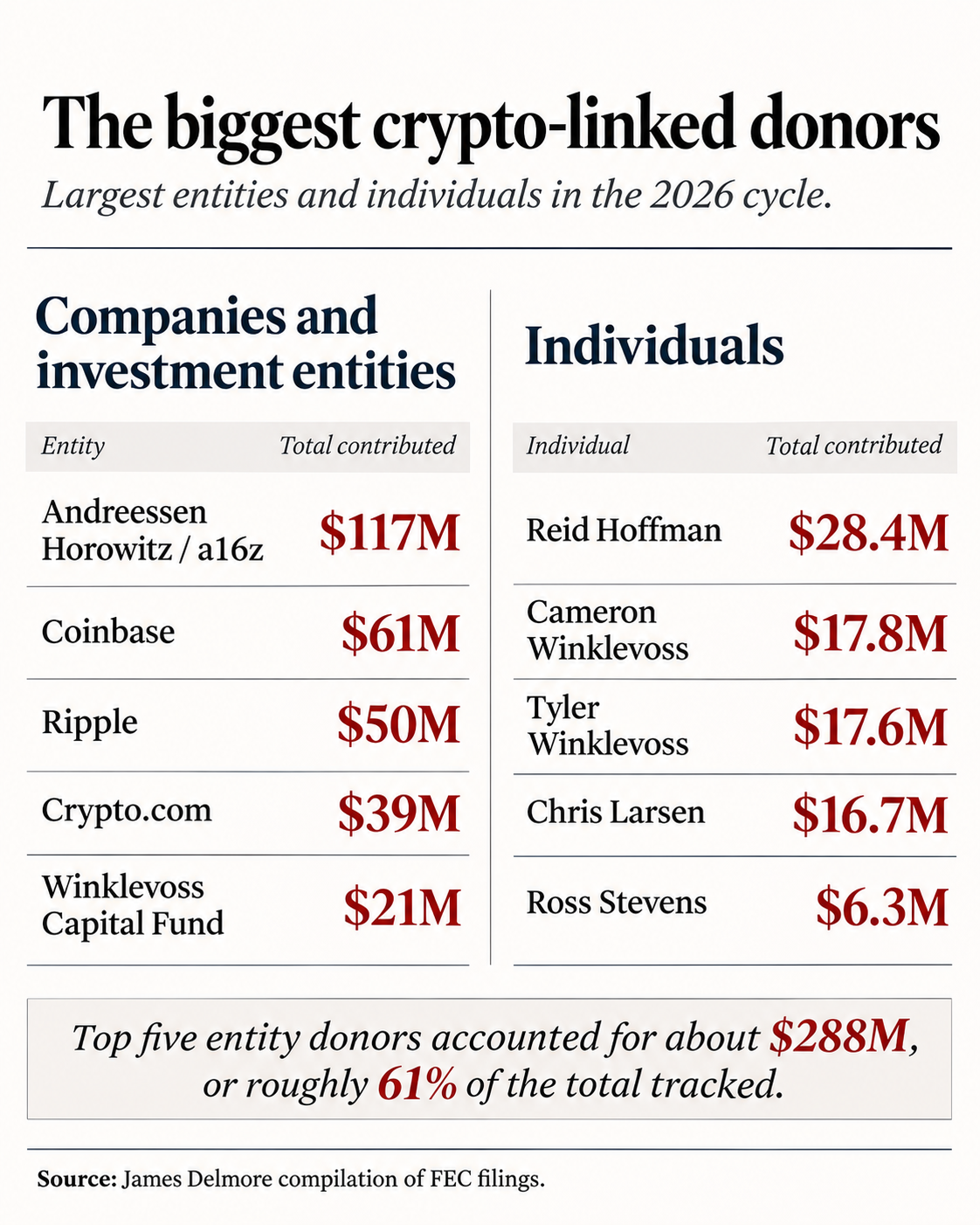
The top five entities account for $288 million, or about 61% of the full donor tally.
Crypto-Native vs Crypto-Affiliated Contributions
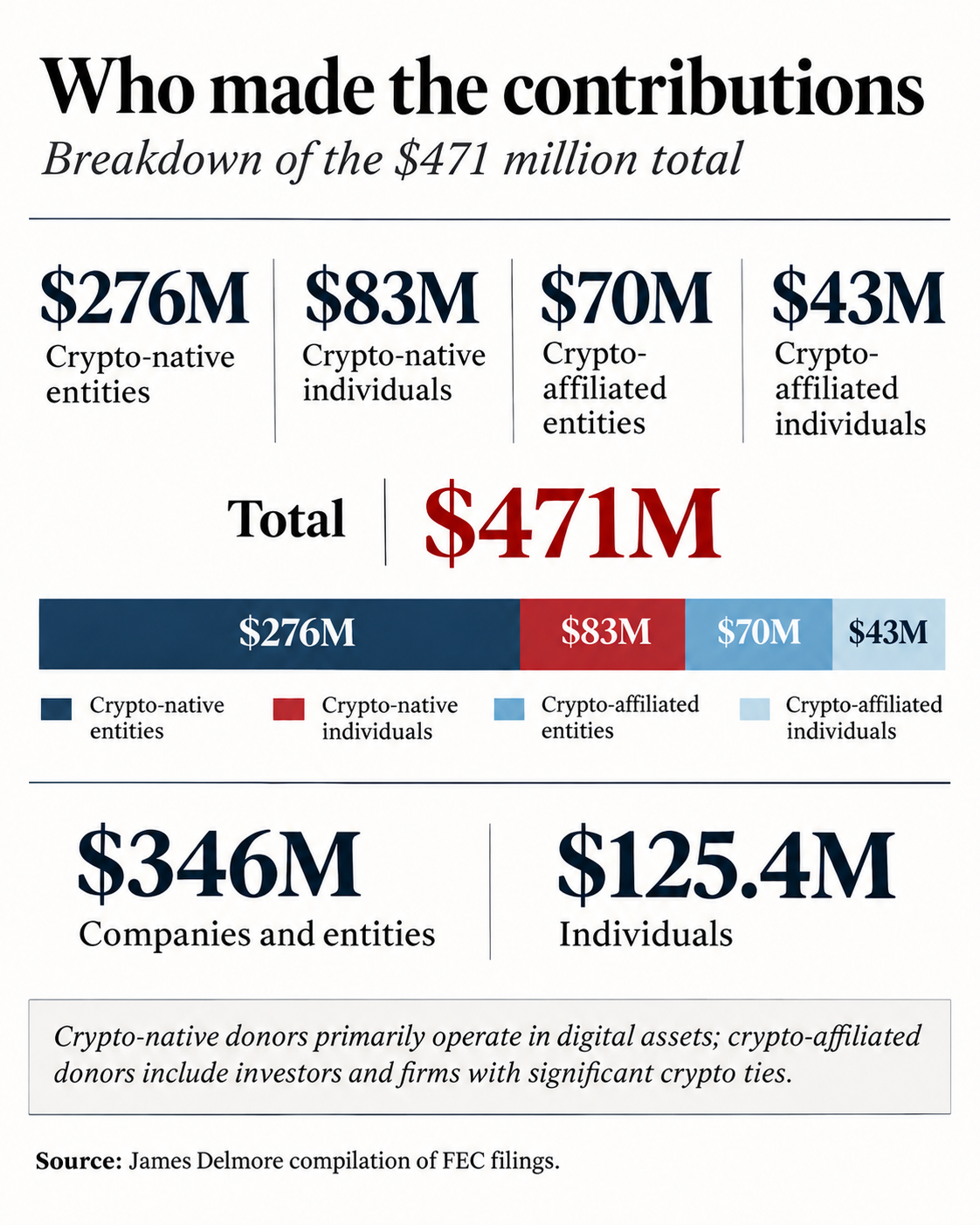
The totals encompass both crypto-native and crypto-affiliated businesses and individuals.
“Crypto-native” denotes businesses and individuals primarily engaged in cryptocurrencies and digital assets.
“Crypto-affiliated” includes diversified firms, investors and individuals with substantial crypto ties, but who also operate in other business sectors.
Crypto-native businesses and individuals accounted for $359 million of the contributions and crypto-affiliated businesses accounted for $113 million.
Crypto Donors by Political Party
Donations Made Using Cryptocurrencies
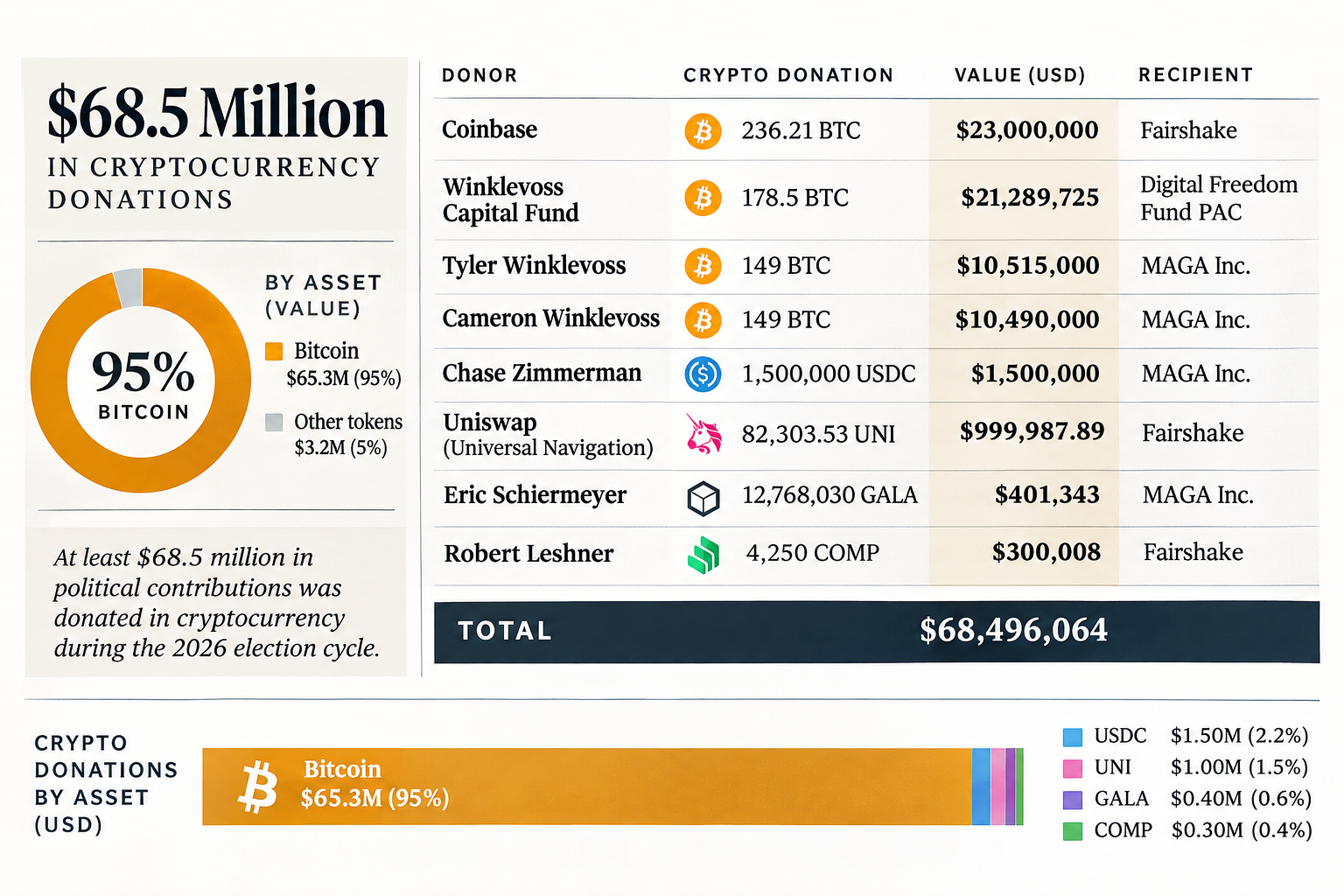
At least $68.5 million was donated with cryptocurrency or stablecoins during the 2026 election cycle, a major increase from the roughly $20 million in contributions made with cryptocurrency in the 2024 election.
The overwhelming majority came in Bitcoin (BTC), which accounted for roughly $65.3 million, or about 95% of the total donations made with crypto.
The Results: An 84% Win Rate, but $88 Million Spent on Losing Candidates
The cryptocurrency industry's record political spending produced a paradoxical result in the 2026 midterms: Crypto-backed candidates won overwhelmingly, but the industry's biggest financial bets failed.
Of the 90 candidates supported by cryptocurrency super PACs, 73 won their races and 14 lost, with three contests still undecided as of November 6. That represents an 84% success rate among decided races—an impressive record on paper, but one that obscures the scale and significance of several defeats.
The most consequential came in Ohio, where Democrat Sherrod Brown defeated Republican incumbent Jon Husted despite approximately $64 million in crypto PAC spending to support Husted or oppose Brown. The industry suffered additional setbacks in Senate contests in Texas, Michigan and Iowa, where candidates favored by some crypto PACs lost.
Two prominent congressional allies also fell: Reps. Bryan Steil of Wisconsin and Bill Huizenga of Michigan, both Republicans with influential roles in cryptocurrency policymaking, lost their reelection bids.
Measured in dollars rather than victories, the results were considerably worse. Approximately $88 million—54% of the $163 million spent by crypto-focused PACs—went toward losing efforts. Ohio alone accounted for $64 million, or nearly 39% of total PAC expenditures.
There were some successes. Crypto PACs spent approximately $34 million backing winning candidates in Senate races in Nebraska, Alabama and Kentucky. But those victories did little to offset the financial weight of the industry's expensive losses.
More consequentially, Democrats gained control of both chambers of Congress, dealing another setback to the industry's pursuit of comprehensive federal cryptocurrency legislation after the Clarity Act failed to advance in the Senate earlier this year.
The election demonstrated both the reach and the limitations of cryptocurrency's growing political influence. The industry helped elect dozens of allies and established itself as a formidable source of campaign financing. But its substantial spending advantage could not deliver some of the seats it prized most—or the congressional majority it had hoped would advance its regulatory agenda.
To win elections, the focus must be on educating the people about why cryptocurrecy and blockchain technology is beneficial to them, not just spending money on ads.
Methodology
Figures are from James Delmore's analysis of political-contribution and PAC-spending records for the 2025–26 cycle, reported as of November 6, 2026. “Crypto-native” denotes businesses and individuals primarily engaged in cryptocurrencies and digital assets. “Crypto-affiliated” includes diversified firms, investors and individuals with substantial crypto ties, but who also operate in other business sectors. Donations by an affiliated donor are not necessarily donations made to advance crypto policy.
The $471 million is a contribution tally. PAC expenditures are presented separately and must not be added to it. PAC fundraising figures can include transfers between committees. Race totals are rounded, and election results remain subject to certification.
